

There is a photograph in most Palestinian families that looks roughly the same. A young woman, seated, hands open, henna drying. Around her, everyone she has ever known. And over her head, a length of white chiffon with embroidery running down both edges.
That is a tarha. It is worn on the henna night, the evening before a wedding, and it has crowned Palestinian brides for as long as anyone can remember.
Then, almost always, it goes into a box.
We think that is a waste of a beautiful thing. So here are four occasions for it, and only one of them is a wedding.
First, what a tarha actually is
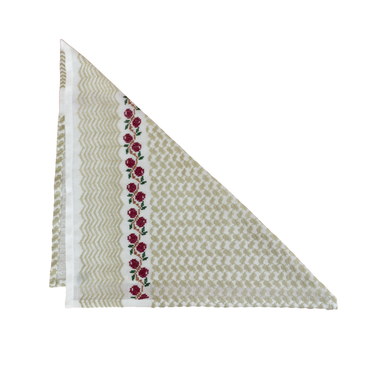
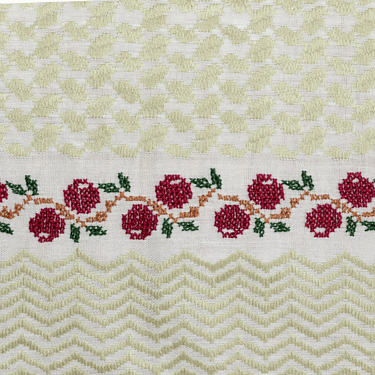
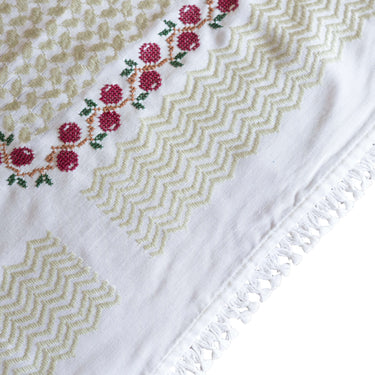
A tarha is a long rectangular veil, worn draped over the head with the length falling behind the shoulders. In Palestinian tradition it belongs to bridal celebration, particularly the henna night, where it is worn with a thobe and often alongside gold. The embroidery is tatreez, the cross-stitch that UNESCO recognised as part of the world's intangible cultural heritage.

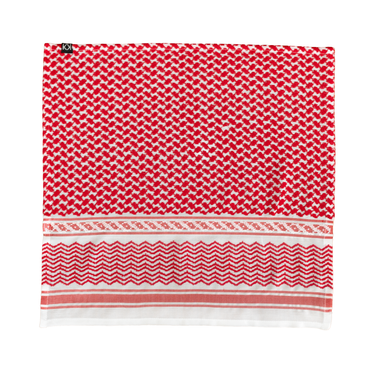
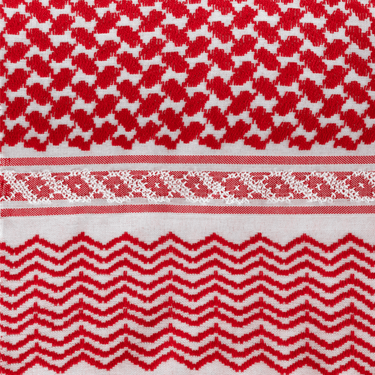
Ours measures 69 inches by 32, in lightweight chiffon, with cross-stitched geometric tatreez and red accents in DMC thread. The border pattern is drawn from the keffiyeh.
That is the whole definition. The more interesting question is when you wear it.
1. The henna night
The occasion it was made for.
Worn the traditional way, the tarha sits centred along the hairline with the embroidered borders framing the face, and the length falls loose down the back. It is not pinned tight. Chiffon this light is meant to move, and in most henna photographs it is moving.

If you are the bride, this is the one night the tarha outranks the dress in every photograph taken of you. If you are a guest, a tarha is a considered gift, and a far better one than another set of towels.
2. The wedding itself
A tarha is not a Western wedding veil and does not try to be. There is no blusher, no cathedral train, no tulle.
What it offers instead is a way to carry your heritage through a ceremony that may otherwise look like everyone else's. Worn over the shoulders rather than the head, it reads as a wrap through the vows and photographs as something with a story.
3. Eid, and the celebrations in between
Eid, engagements, a graduation, the first big family gathering after a long year. Any occasion where you would reach for something more considered than a scarf and less committed than a thobe.
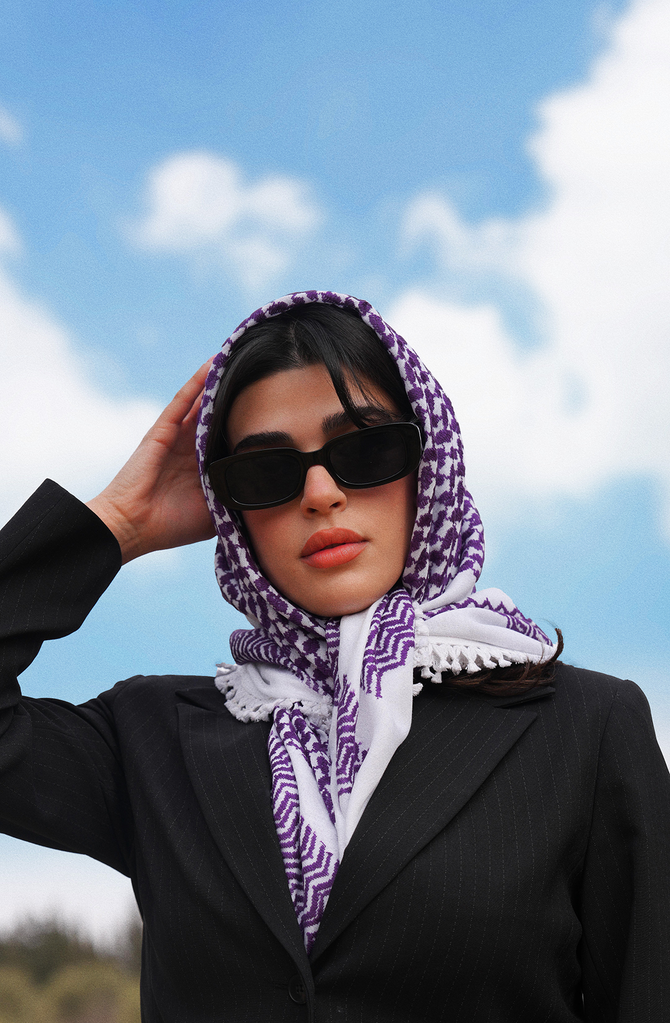
Pushed back off the head so it sits across the shoulders, the tarha behaves like a wrap with the embroidery visible at the front. This is the version that travels best between a mosque, a lunch, and someone's living room.
4. A Tuesday
This is the one we care about.

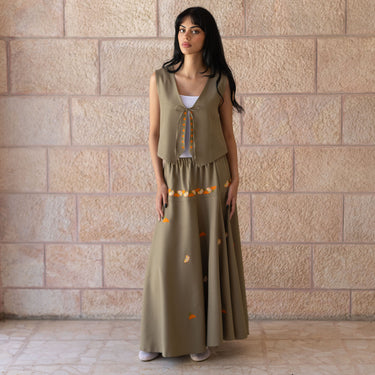
A white t-shirt. Jeans. A tarha over the top, either draped over the head or pushed back across the shoulders. That is the entire outfit, and it works because the chiffon and the denim are so far apart that the contrast does the styling for you.
Nothing about the tarha requires an occasion. The occasion is a tradition, not a rule. Worn over everyday clothes it stops being formalwear and becomes what it probably should have been all along, which is a beautiful piece of cloth that someone embroidered by hand.
On the embroidery

Every tatreez stitch on our tarha is placed by hand by women in our own workshop in Amman, trained and employed by KUVRD. Hand-stitching means no two pieces land identically. The red accents sit slightly differently on each one, and that is the point of buying something made by a person.
Every sale funds Karam, our giving programme.
Caring for it
Hand wash cold. Lay flat to dry. Cool iron on the chiffon only, and never directly over the embroidery. Stored folded rather than hung, it will outlast the occasion you bought it for, which is rather the idea.
Shop the piece: Tarhat Bladi, or browse the full Tatreez collection.