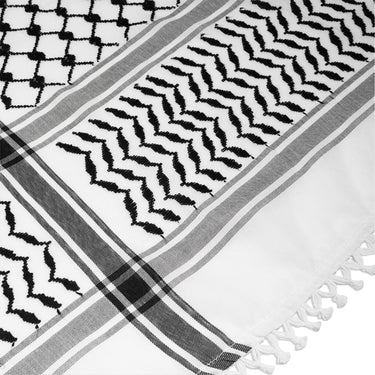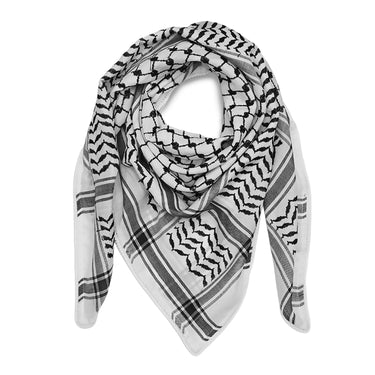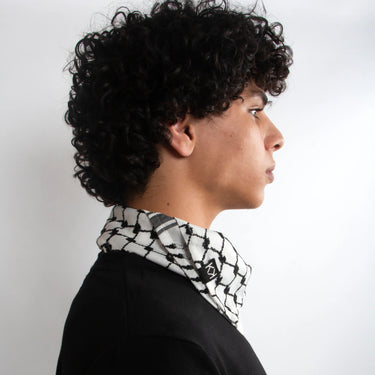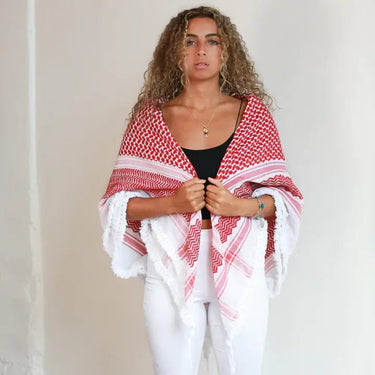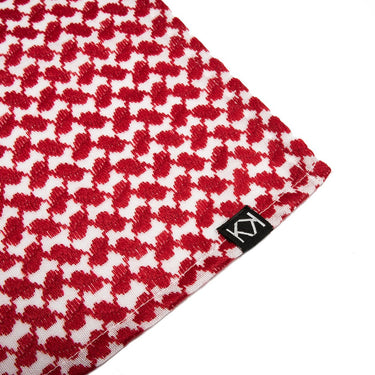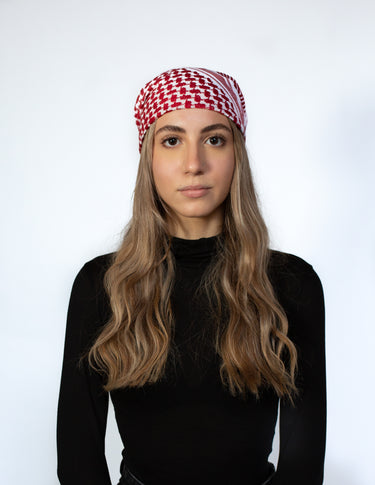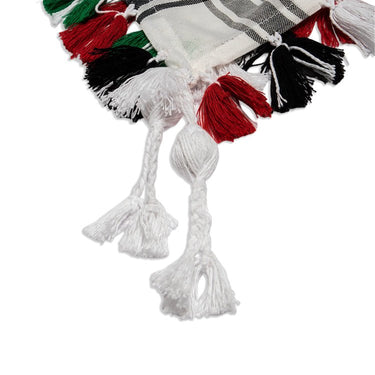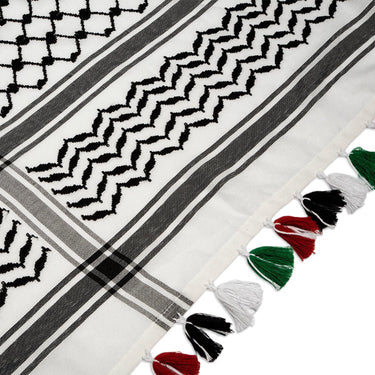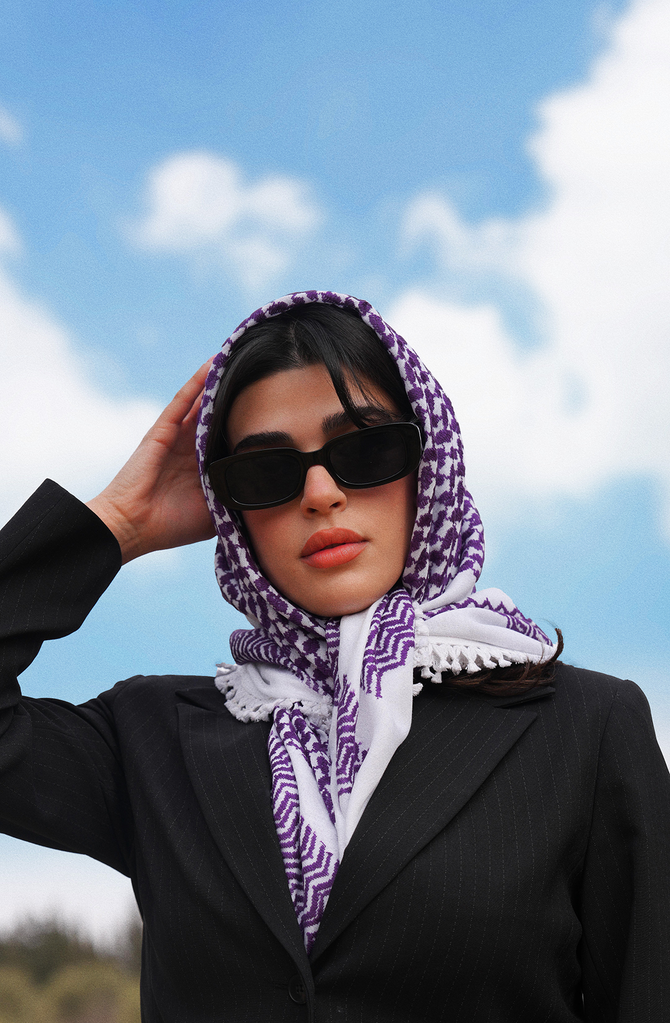


To tie a shemagh, fold the square in half into a triangle, place the folded edge across your forehead with one tail longer than the other, wrap the long tail under your chin or across your face, bring both ends around the back of your head, and tie them with a double knot. That is the core military method. Four other configurations, for sun, dust, cold, and full desert coverage, are below with numbered steps.
A shemagh is a large cotton square, ideally around 47 inches per side, and it has protected people working outdoors in the Middle East for centuries. British desert units adopted it in the Second World War and armies have issued it ever since, which is why it shows up in every surplus store. It works because of simple physics: loose woven cotton shades skin, traps a layer of still air, filters dust, and dries fast.

Why does a full-size 47-inch square work best?
Size determines what the scarf can do. Many budget "tactical scarves" run 40 to 42 inches, and the missing inches matter:
- Tail length. Full wraps need enough tail to circle your head twice and still tie off. Short squares leave you with a knot that works loose by noon.
- Coverage. A 47-inch triangle covers head, neck, and lower face at the same time. Smaller squares force you to choose.
- Utility. At full size the same cloth works as a sun shade, ground cloth, towel, pot holder, or arm sling. Backpackers carry it because one square of cloth replaces four single-purpose items.
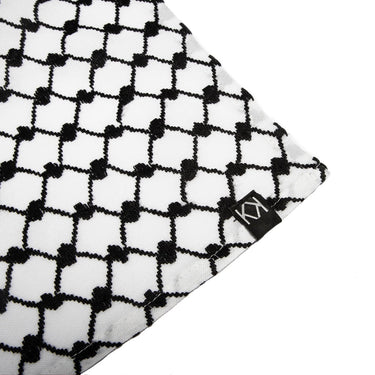
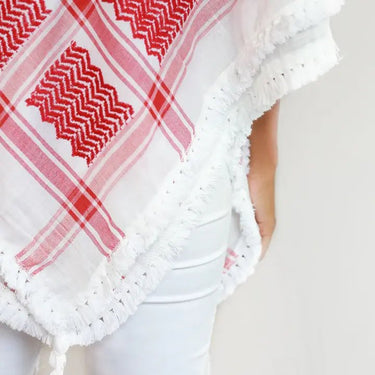
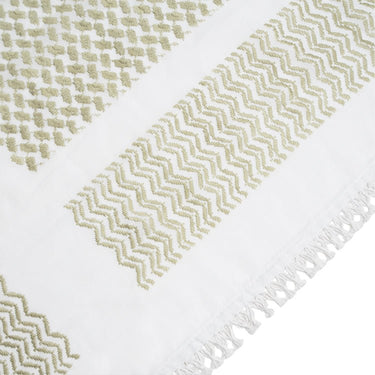
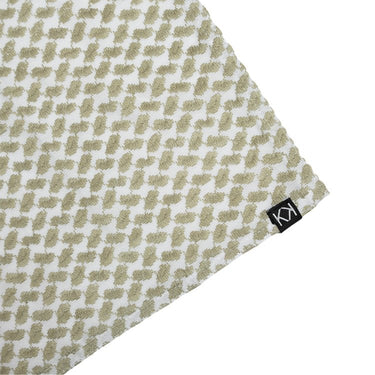
Fabric matters as much as size. You want woven cotton, not polyester blends. Cotton absorbs sweat and cools you as it evaporates; polyester traps heat against your skin and melts near camp stoves. Our cloth is woven in our family factory in Jordan, in the same weave used across the region for generations of outdoor work. You can see the production process in how the keffiyeh is made.
Method 1: How do you tie a shemagh as a head wrap for sun?
Best for: hiking exposed ridgelines, fieldwork, any long day under direct sun.
- Fold the shemagh in half to form a triangle.
- Drape it over your head with the folded edge just above your eyebrows and the point hanging down your back.
- Take the two side tails and cross them behind your head, over the hanging point.
- Bring both tails back around to your forehead and tie a small double knot at the front or side.
- Adjust the cloth so it shades your ears and the back of your neck.

The back point protects the neck, the spot hikers burn first. Air circulates under the loose cloth, so this is cooler than a ball cap in dry heat.
Method 2: How do you tie a shemagh as a face and dust wrap?
Best for: dust storms, dirt-road cycling, quad or motorbike riding, sanding and shop work. This is the classic military tie.
- Fold into a triangle.
- Place the folded edge across your forehead, positioned so the right tail hangs about twice as long as the left.
- Hold the short tail against your left cheek.
- Sweep the long tail under your chin, up across your nose and mouth, and over the short tail.
- Continue wrapping the long tail around the back of your head.
- Tie the two ends together at the side or back with a double knot.
- Pinch the cloth off your nostrils slightly so you can breathe freely.
Cotton weave filters wind-blown grit well. It is not a respirator; for silica dust or smoke, wear a rated mask underneath and use the shemagh to keep it sealed and shaded.
Method 3: How do you wear a shemagh as a neck gaiter?
Best for: cold mornings on trail, layering under a jacket, casual wear.
- Fold the square into a triangle.
- Roll or loosely fold the triangle from the point toward the long edge until you have a wide band.
- Wrap the band once around your neck with the ends at the back.
- Cross the ends behind your neck and bring them to the front.
- Tie loosely or tuck the ends into the wrap.

Rolled cotton traps warm air like a fleece gaiter but vents better when you start climbing. Pull it up over your chin as temperature drops.
Method 4: How do you tie a full desert wrap?
Best for: maximum coverage in extreme sun, sand, and wind. This combines Methods 1 and 2.
- Fold into a triangle and drape over your head, folded edge at the eyebrows, with one tail roughly twice as long as the other.
- Hold the short tail against your cheek.
- Wrap the long tail under your chin, then diagonally up across your nose and mouth.
- Carry it around the back of your head, over the crown if you want the top locked down.
- Tie both ends in a double knot at the temple or the back.
- Leave only your eyes exposed; add sunglasses or goggles to finish the seal.
Every part of this wrap has a job: crown shaded, neck covered, airway filtered, and the whole assembly stays put in wind because it is tied, not tucked.
Method 5: How do you tie a shemagh as a headband or shawl?
Best for: sweat control on hard climbs, keeping hair back, cool evenings.
- Fold the square into a triangle, then roll from the long edge into a band about two inches wide.
- Center the band on your forehead.
- Tie the ends behind your head with a double knot.
- Tuck the loose tails under the band or let them hang.
For the shawl variant, lay the folded shemagh over your shoulders and let the ends hang naturally or tie them loosely. Warmth and coverage for cool evenings, with no knot against your neck.

Where does the shemagh come from, and does wearing one carry meaning?
One thing worth knowing before you head out. The shemagh belongs to the same family of garments as the keffiyeh, headwear worn across the Levant, Iraq, and Arabia for centuries; the names and colors vary by country, and our guide to the keffiyeh vs the shemagh maps out which is which. The black-and-white Palestinian keffiyeh in particular carries deep national meaning, a history Britannica traces from rural workwear to national symbol. Practical use and cultural respect coexist without difficulty: this cloth was built for sun and dust, and wearing it for those purposes is exactly what it is for. If you want to think that through properly, we wrote an honest answer to whether it is offensive to wear a keffiyeh. Knowing what you are wearing, and buying it from the people who actually make it, is most of the answer.
FAQ
What is the easiest way to tie a shemagh?
The neck gaiter. Fold into a triangle, roll into a band, wrap once around the neck, and tie or tuck the ends. It takes ten seconds.
How big should a shemagh be?
Around 47 inches square. Smaller scarves lack the tail length for secure face wraps and the coverage for full desert ties.
Is cotton or polyester better for a shemagh?
Cotton. It breathes, absorbs sweat, cools by evaporation, and will not melt near a fire. Polyester blends trap heat and hold odour.
Will a shemagh stop dust?
It filters wind-blown sand and trail dust well. It is not a substitute for a rated respirator against fine silica dust or smoke.
Is it okay to wear a shemagh for hiking?
Yes. It is a practical garment designed for sun and dust. Wear it knowing its cultural background, and buy from producers connected to the craft.
Full-size cotton shemaghs and keffiyehs, woven by our family in Jordan, are in the keffiyeh collection.