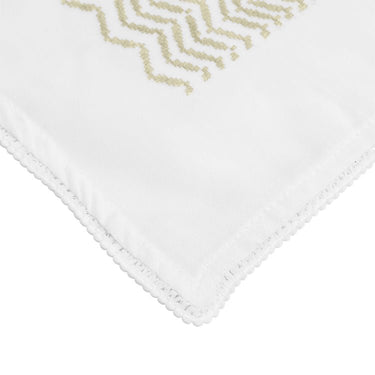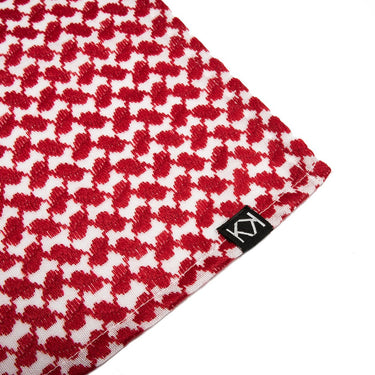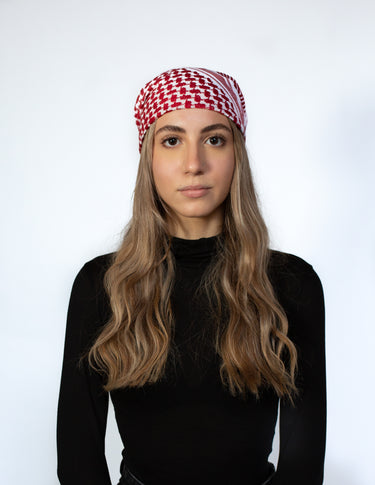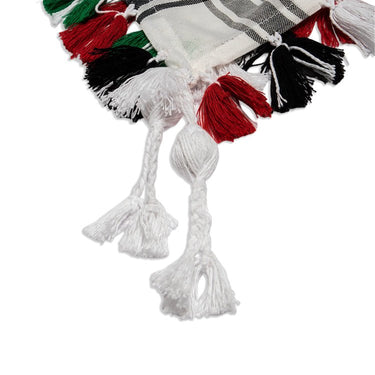


Learning how to wear a keffiyeh starts with understanding what it represents: a cultural symbol, a practical garment, and a visible sign of solidarity. Across Palestine and beyond, people wear the keffiyeh and shemagh in many ways, each style carrying its own purpose and message.
At KUVRD, we believe that learning how to wear a keffiyeh should go hand in hand with understanding its meaning. This guide explains traditional and modern styles while respecting the history behind them.
What Is a Keffiyeh, Kufiya, or Shemagh?
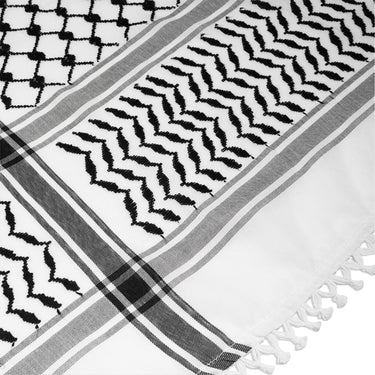
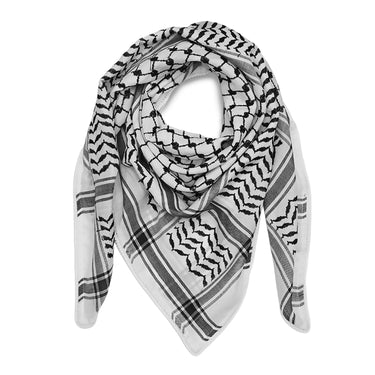
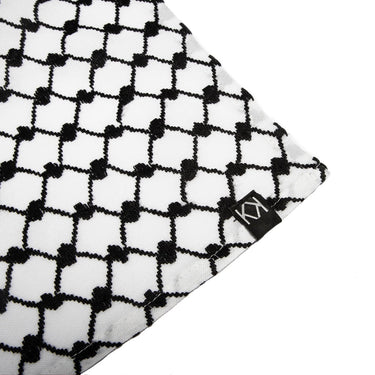
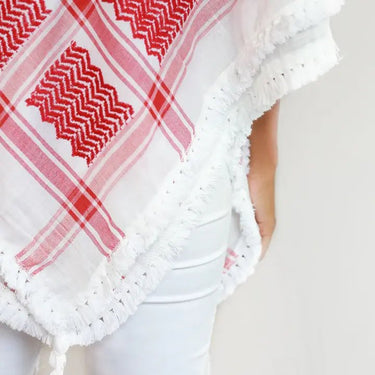
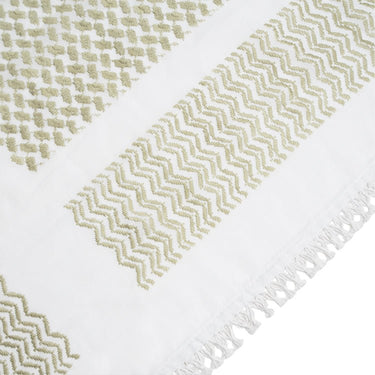
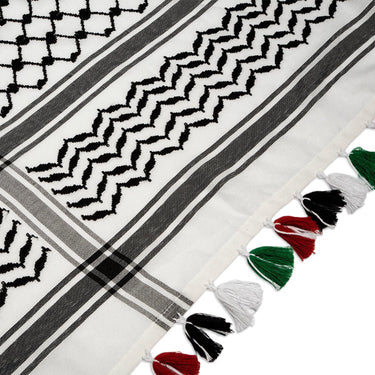
The kufiya—often called a keffiyeh, shemagh, or hatta—is a traditional Arabic scarf. It is usually square and woven with a distinctive pattern. Historically, it was worn as a head covering to protect against sun, dust, and wind.
The keffiyeh is typically lighter and designed for daily wear. In contrast, the shemagh is often thicker and more reinforced. Because of this, the shemagh is commonly used in colder or harsher conditions. Both styles, however, share deep cultural roots.

A Symbol of Support, Freedom, and Identity
Over time, the Palestinian keffiyeh became far more than practical clothing. It grew into a symbol of resistance, freedom, and unity. Today, wearing a keffiyeh often signals support for the Palestinian people and their right to self-determination.
With the rise of global e-commerce, many people now choose authentic scarves as a way to support Palestinian makers. Family-owned factories across Palestine and the Palestinian diaspora have played a key role in preserving traditional craftsmanship. The authentic Palestinian keffiyeh, made by families like ours since the 1950s, first in Hebron and Jericho and now in Jordan, is the truest expression of this heritage.
How to Tie a Shemagh or Keffiyeh Scarf
As photos of people wearing keffiyehs circulate around the world, the scarf continues to spread its message. Learning how to tie a shemagh or keffiyeh allows wearers to choose a style that suits both function and meaning.
Below are some of the most common and respectful ways to wear it.
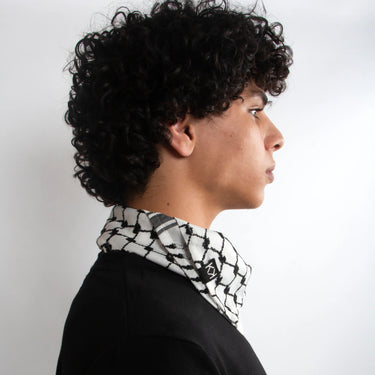
Classic Keffiyeh Neck Wrap

This is one of the most popular modern styles. It is relaxed, practical, and easy to pair with casual clothing.
How to wear it:
- Fold the kufiya into a triangle
- Place it around your neck with both ends even
- Tie the ends loosely behind your neck
- Bring the ends forward and let them rest on your chest
- Adjust until it feels comfortable
Tidy Keffiyeh Neck Wrap

This style looks cleaner and more structured. It is ideal for cooler weather or a polished look.
How to wear it:
- Fold the kufiya into a triangle
- Wrap it around your neck without tying
- Cross the ends once at the back
- Bring them forward and secure gently
- Tuck in excess fabric for a neat finish
Traditional Head and Face Wrap

This style has long been associated with protection and protest. It is practical in strong sun, wind, or dust.
How to wear it:
- Fold the keffiyeh into a triangle
- Place it over your head with equal ends
- Wrap one side under the chin
- Pull the other side across the face
- Tie both ends securely at the back
Gulf-Style Ghutra Head Wrap

Also known as the ghutra, this style is common in the Gulf region. It can be worn with an agal for added security.
How to wear it:
- Fold the kufiya into a triangle
- Place it on your head above the eyebrows
- Let both sides fall evenly
- Wrap and tuck the ends neatly
- Adjust for comfort and coverage
Arafat-Style Keffiyeh with Agal

This style is strongly associated with Palestinian leadership and heritage. It is formal and symbolic.
How to wear it:
- Fold the keffiyeh into a triangle
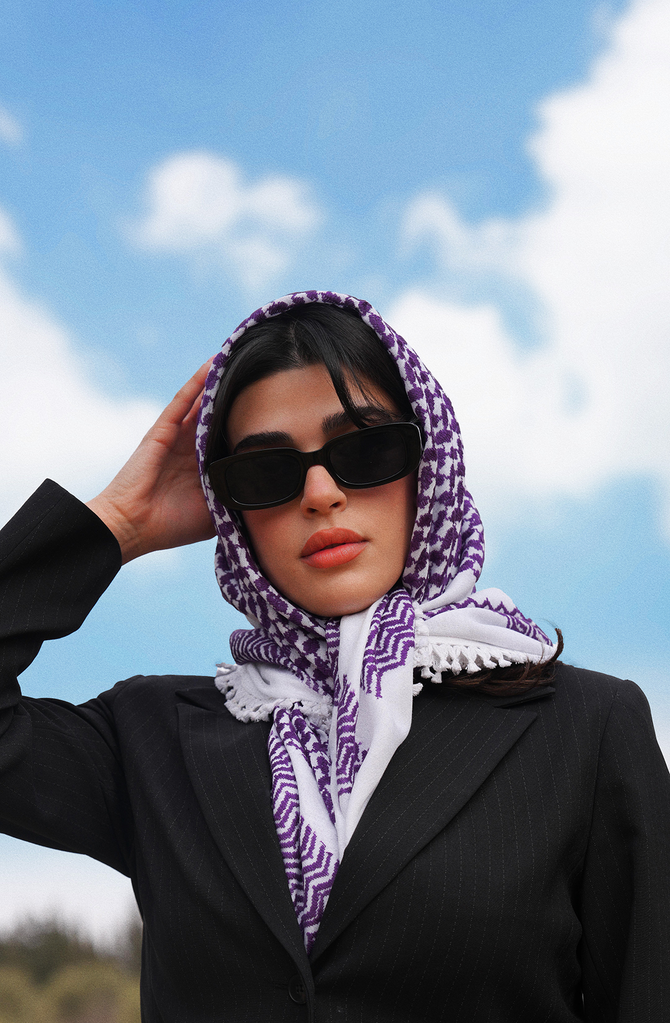
- Drape it over your head and shoulders
- Secure it with an agal
- Adjust so it sits evenly along the hairline
Casual Shoulder Wrap
For a relaxed look, the keffiyeh can be worn without tying.
How to wear it:
- Fold the kufiya into a triangle
- Drape it over your shoulders
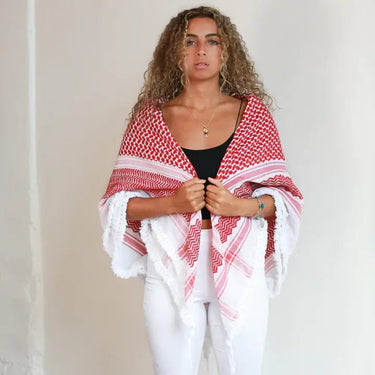
- Let the pattern remain visible
- Adjust the length evenly
Simple Scarf Style

The keffiyeh can also be worn like a regular scarf. This works well for everyday wear.
How to wear it:
- Place the scarf behind your neck
- Let one side hang longer
- Wrap the longer end loosely
- Adjust until comfortable
The Keffiyeh as a Message
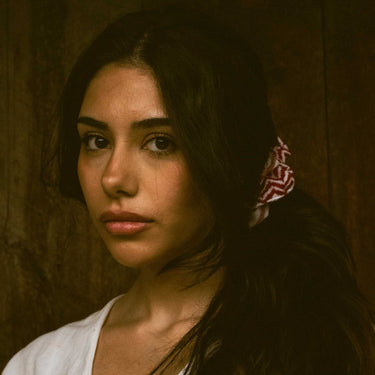
Across the world, people wear the Palestine scarf or keffiyeh in personal and creative ways. Social media has helped amplify its message, connecting wearers across borders. Still, it is important to remember its roots.
Across the world, people wear the Palestine scarf or keffiyeh in personal and creative ways. Social media has helped amplify its message, connecting wearers across borders. Still, it is important to remember its roots.
Those roots are why it matters who makes yours. Most keffiyehs sold today are mass-produced replicas, woven on machines with no connection to the thing they imitate. Ours come from our family's own looms.
Our grandfather, Jido Ahmed al-Bulbul, left Jaffa in 1948 and opened the Golden Textile Factory in Jericho ten years later. When the family was displaced again in 1967, he rebuilt it in Jordan — the first keffiyeh factory in the country — and ran it for forty years. His sons run it still.
Choosing authenticity protects both meaning and craftsmanship. It also keeps a loom running that has survived two displacements.
Frequently Asked Questions
Is a kufi the same as a keffiyeh?
No. A kufi is a cap, while a keffiyeh or kufiya is a scarf worn on the head or neck.
What is the difference between a keffiyeh and a shemagh?
A keffiyeh is lighter and worn daily. A shemagh is thicker and often used in tougher conditions.
What makes an authentic Palestinian keffiyeh?
An authentic Palestinian keffiyeh is made by a family-owned factory with roots in Palestine, whether still there or in the diaspora, and can tell you who made it and where. KUVRD's keffiyehs are woven in our family-owned factory in Jordan, originally founded by our grandfather in Jericho, Palestine, across three generations of continuous craft.
Can anyone wear a keffiyeh?
Yes, when worn with respect and understanding of its cultural meaning.
Why do people learn how to tie a shemagh in different ways?
Different styles serve different needs, from protection to cultural expression.